
TEXAS, USA — October 7. January 6. September 11.
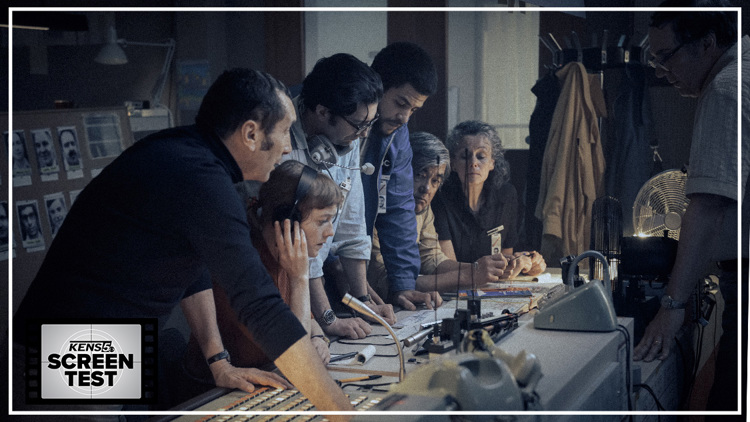
We like to provide that kind of shorthand for the world-rattling events that ensure we won’t be going to sleep in the same one we woke up in. So it goes that Swiss director Tim Fehlbaum adopts the approach for his third feature “September 5,” which tracks the terrorist attack at the 1972 Munich Olympics through the eyes of the ABC Sports crew that found itself covering a very different kind of drama — the infiltration of Palestinian militants into Olympic Village, where they took members of the Israeli Olympics Teams hostage — just as they were preparing to call it a night.
But using the date to title his movie about the split-second, high-pressure, not-always-correct decisions of journalists witnessing history unfold from the front row accomplishes something else for Fehlbaum, something commendable if not always at the forefront of his project that is both fast-moving and structurally static: It emphasizes the matter-of-factness by which journalists are expected to approach every day, and the psychological gymnastics required of them to embrace that even the single busiest shift of their careers is but one drop in the currents of history. You risk missing the story if you don’t stick the landing. You find yourself wringing panic out of your gut if you don’t listen to it.
Or, at the very least, to the distant pop-pop-pop heard outside the ABC studio at 4 a.m. early in Fehlbaum’s 95-minute movie, which may disorient you with crumpled-timeline storytelling but doesn’t dilute the value every precious moment represented for this sports crew-turned-news brigade. The employees heading out for the day don’t know the sun will soon come up on one of the 20th century’s biggest stories – and the first terrorist attack to be covered live by TV networks – but they don’t have to. “September 5” may rest on its laurels when it comes to meaningfully discerning journalism's strange paradox of witnessing history and helping to shape said history, but it clearly understands it's an occupation where the type of person you are will be reflected in how you approach the job.
The performances certainly help, as well as the comforting realization that job titles carried by the movie's key characters don’t matter as much as how much decision-making power they wield. Roone Arledge (Peter Sarsgaard, suavely cool, calm and collected) plays the executive who carries the wisdom of experience; Marianne Gebhardt (Leonie Benesch) is the German newbie compelled to participate in the information-gathering because she understands the stakes; and John Magaro, in the film’s best performance as Geoffrey Mason, the broadcast producer calling the minute-to-minute shots, fully encapsulates the balance of incredulity and practicality the job requires. “September 5” positions itself as a one-setting blood-boiler, which makes sense—it serves to emphasize that every little development in the ABC studio matters in order to make sense of everything happening outside it.
“It’s not about politics, it’s about emotion,” Roone says about his sports coverage decisions early on, giving the movie’s eventual escalation a much-needed finesse after it opens with a thuddingly blunt ABC Sports promise of “around the clock” Olympics coverage, an imperative that will soon take on prickly new stakes. Succinct as Roone’s reasoning is, “September 5” (written by Fehlbaum, Moritz Binder and Alex David) is less interested in picking apart the inherent conflict coursing through it – namely, that almost nothing else fuels society’s emotions like politics – than baking it into the aesthetic makeup of a movie in which process and organization must hold ground for the ABC crew against chaos and confusion.
In that sense, “September 5” does its job, holding your attention and indeed only incorporating politics as wallpaper and never really building it into the foundation. Roone would commend the work done here, in other words; he’d tip his hat to the no-nonsense approach of Fehlbaum and his collaborators in telling a story where often the only thing that matters for Geoffrey and company is picking the right camera that can capture the stunning scenes clearly from the balcony. You almost feel the confines of the small studio tightening still, as if the crisis were bringing our different players closer together. So long as you don’t think about the fact that the events of the Munich massacre unfolded over 20 hours and not 90 minutes, “September 5” will also likely draw you in with its sly pacing, Hansjörg Weißbrich’s quick cuts finding a balance between the situation’s frantic nature and the crew’s virtuosic savvy. You also get the sense, however – and pretty early on – that “September 5” is content to settle into a rhythm that will reliably thrill for the course of runtime, but not exactly surprise.
Yet the process grips us because no TV crew had dealt with a situation like this before. These are people listening to information, deciphering information, determining how to deliver that information—and it’s a process as prone to pitfalls as any. The sympathy we feel the movie extending to Geoffrey, whom Fehlbaum designates as the fulcrum of nervous anticipation when the crew must decide late whether to share vital but unconfirmed reporting, may very well be Fehlbaum acknowledging his precarious position telling this story inherently undergirded by complicated politics. Suffice to say, the 43-year-old director hardly boasts the resume Steven Spielberg did when he made “Munich” – Fehlbaum’s two prior features “The Colony” and “Hell” are every bit the genre artifacts their titles suggest they are – and we don’t much get a sense of his perspective beyond meeting the demands of such a consequential event as covered by those watching at a proverbial distance, and doing so with the same resourcefulness. He’s calling the shots, not providing the insight. But that job, too, in both filmmaking and journalism, matters all the same.
"September 5" is rated R for language. It opens in San Antonio theaters Friday. Runtime: 1 hour, 35 minutes.
Starring Peter Sarsgaard, John Magaro, Ben Chaplin, Leonie Benesch
Directed by Tim Fehlbaum; written by Fehlbaum, Moritz Binder and Alex David
2025
---
MORE REVIEWS: