
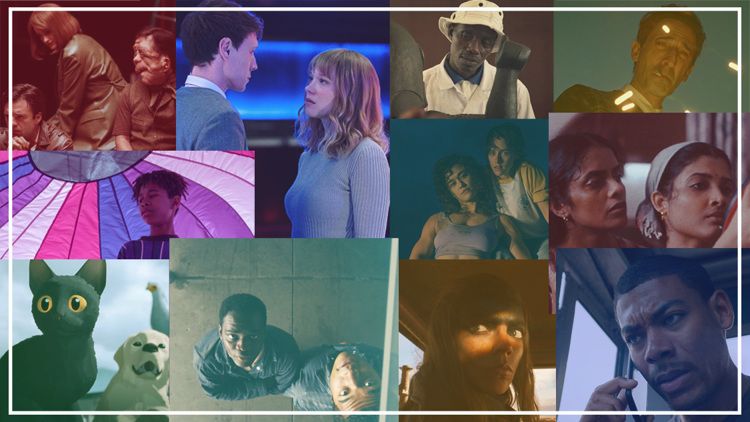
TEXAS, USA — Movie lovers who spent too much time online for their own good this year might have noticed a refrain cresting and retreating like the proverbial tide, as these sentiments often do: After a 2023 that saw new works from the likes of heavyweights Scorsese, Nolan, Haynes, Miyazaki, Anderson and Reichardt, how could 2024 possibly compare without such a bounty of heavyweight names?
As it turns out, it compared quite well, to the point of being (in this critic's eyes) the medium's most exciting year of the 2020s so far. You don't need to point to the still-blossoming Academy Awards race to find evidence, though you could: A grandiose epic about America's darkest traits, an antic sex worker dramedy, a French trans crime musical and a thriller set in the world of Vatican politics all have a viable shot at winning Best Picture. Meanwhile, a nasty bit of body horror and a dialogue-free movie about a cat contending with cataclysm could very well nab other major Oscars.
You'll see a couple of those movies in the list below, and others that help paint the picture of 2024 as a magnificent time for those seeking discovery at the cinema, the potential for which remains as alive as ever despite the impacts of 2023's strikes. It also remains true you can be surprised when you least expect it – most of the movies below came out in the first half of the year than the second – and from places or people you wouldn't expect. And as much as any recent year, it appears, these standout movies brought the spotlight to communities that haven't historically been able to find it.
That makes 2024's offerings valuable. That so many of those films just happened to be exemplary makes the year that much more vital in the face of so much uncertainty within the industry, and outside it too. Read on for my picks of the year's best.
25. “The End” (dir. Joshua Oppenheimer)
There’s no underestimating the intention behind Joshua Oppenheimer’s decision to keep flashbacks out of his post-apocalyptic musical drama “The End,” about a family living in an underground bunker suddenly forced to grapple with past transgressions. This is, after all, a movie that resides fully and completely in the present—and in the present question of whether it’s safe to continue having your worldview shaped by those who seized the ability to do so. The main person doing that questioning is George Mackay’s “Son,” who doesn’t know a world outside the caverns where Tilda Swinton and Michael Shannon raise him, and hasn’t had a reason to ever wonder about it before the arrival of a mysterious woman played by Moses Ingram. The tensions that flare between our characters speak to the things we leave behind for our children to reckon with, sure, but also to that truth that no good future was ever built without making sense of the now.
In theaters.
24. “How to Have Sex” (dir. Molly Manning Walker)
Every now and then a movie comes along that doesn’t just purport to sympathize with the strange interpersonal dynamics of youth but also conveys them in a way that ties your stomach into knots. “How to Have Sex” is that entry for 2024. An observational drama so painfully and organically rendered you might mistake it for documentary, Molly Manning Walker’s movie follows three young British BFFs’ getaway at a resort that represents the wild wild west of teenagerdom—daytime drinking games have a master of ceremonies and nighttime raves are headlined by sexual contests that would make “Skins” blush. All the while, the close proximity to the possibility of sex becomes a force powerful enough to test even the most ride-or-die friendships, but what makes “How to Have Sex” stand out is the absence of a clear villain to pin our frustrations on. This is what being young is, after all: testing the limits of others to find where our own are.
Streaming on MUBI and available to rent digitally.
23. “The People’s Joker” (dir. Vera Drew)
In a moment of artistic transition for big-screen DC Comics storytelling that’s seeing James Gunn, Matt Reeves and Co. taking a stab at the Justice League, Vera Drew uses Gotham City as the setting for her own story of gender transition, in the process asking (amid some copyright feuds): If major filmmakers can live in the worlds of pop culture’s most recognizable characters, why can’t we? “The People’s Joker” plays like an encapsulation of Drew answering that question on the fly (complimentary), building a Gotham out of her turbulent personal journey that’s akin to a neon-sprayed pop-up book and populated with riffs on familiar Batman characters more concerned with relationship issues than apocalyptic ones. Drew upturns genre conventions by embracing identity instead of hiding it behind a mask, conjuring up her own self-affirming spirit of anarchy.
Streaming on MUBI and available to rent digitally.
22. “Flow” (dir. Gints Zilbadolis)
First, you notice the magnificently lifelike movements of the cat and other animals teaming up at the (maybe) end of the world in “Flow,” when a terrible flood has overtaken a wilderness that a cat, some dogs and one very curious lemur call home. Not long after, you start to see the soul too.
Pointed in its theme that solidarity becomes necessary when circumstances are at their starkest, yet optimistic in its suggestion that solidarity will organically bloom even between foes, Latvia’s Best International Feature submission at the Academy Awards brings awe-inspiring levels of feeling down to a scale any audience member can appreciate: a group of animals escaping disaster on a sail boat. That these animals don’t talk not only makes it easier to appreciate how slyly the animators envisioned communication through eyes, mouths and meows; it also reminds us there will be times when no amount of dialogue will be enough to distract us from the reality unfolding before our very eyes.
In theaters.
21. “Sing Sing” (dir. Greg Kwedar)
Speaking of solidarity, Austin director Greg Kwedar’s “Sing Sing” – the ensemble for which is filled out by formerly incarcerated men who participated in the Rehabilitation Through the Arts program his movie dramatizes – may be the best example of a 2024 non-documentary film lifting up its subject through the details of its filmmaking. It’s no mere gimmick: The lived experience of Clarence Maclin, David Giraudy, Patrick Griffin, James Williams and the rest of the cast behind star Colman Domingo bring texture to Kwedar’s movie about the theatrical arts initiative that helps imprisoned men find purpose, brotherhood and drive. Kwedar follows through on his end, finding melodic storytelling rhythms echoing the men’s journey of ensuring they’re no more prisoners to life than they are to a system. Some of its simplest shots – most notably one of Domingo reaching through the bars of his cell to the blue sky outside – are among the year’s most poetic.
Returning to theaters Jan. 17.
20. “Megalopolis” (dir. Francis Ford Coppola)
Hollywood releases many hundreds of movies in any given year. We should be so lucky that at least one of those annual offerings is as inexplicable, unwieldy, unpredictable and veritably one of a kind as Francis Ford Coppola’s “Megalopolis.”
Part of the reason for that is because “Megalopolis,” for all its manic and self-distracting fervor, is a kaleidoscope of cinematic reference. It’d take less time to describe what the movie aesthetically isn’t than what it is over the course of 138 minutes (same goes for the plot). There are disorienting drug trips that evoke the German expressionism of the early 20th century; glinting costumes fit for Coliseum spectacle; shadows and shades of urban noir; title cards and orchestral sweep borrowing from the silent era; shimmering environments honoring the wobbly early years of computer-generated effects; throttling images of uprising fit for any historical moment of unrest, although the tell-tale red ballcaps directly suggest more recent events as inspiration. “Megalopolis” takes after all eras—sometimes clashing them together in the same frame, sometimes frustratingly, sometimes stunningly. The clearest thing about this disorienting movie is that it represents a work of cinematic ecstasy for its director.
Available to rent digitally. Read our full review here.
19. “The Breaking Ice” (dir. Anthony Chen)
Take “Challengers,” replace the flashy direction with a more existential mood, add an extra dash of will-they-won’t-they tension, triple the quotient of feeling stuck in your pursuits and you’d get “The Breaking Ice.” The movie follows a suicidal young man who joins a bored tour guide and her maybe-onetime-boyfriend on spontaneous adventures that defrosts the distance at which they’re navigating the rest of the world and their willingness to close the gap. It’s a slice of life story about three young people – far too young to be in the dead ends they find themselves in at the start – slowly rediscovering the desire to see what the rest of the pie consists of, and its slyest trick is creating unexpected payoff to our suspicion that someone may not exactly be who they say they are. Spoiler alert: This supremely honest movie takes a different, much more moving direction.
Streaming on The Criterion Channel and available to rent digitally.
18. “Seagrass” (dir. Meredith Hama-Brown)
How good is Ally Maki in “Seagrass,” in which she plays a woman haunted by personal shortcomings now widening the cracks of a crumbling marriage? So good that you can marvel at her performance, wonder where she came from, then realize she’s been a relative mainstay in film and TV for quite a while now. That Maki is cleanly able to shed her comedic persona for this horror-tinged heavyweight drama about the perils of being vulnerable perfectly fits her character of Judith, who is so beset by questions about identity, absence and capability that she may end up being a liability to those who need her most. The rest of the cast, from Luke Robert and Chris Pang to young Nyha Huang Breitkreuz, is aces as well.
Available to rent digitally.
17. “Dahomey” (dir. Mati Diop)
An apt companion piece to “Descendant,” another recent documentary about the value that totems of cultural history still hold (or don’t anymore), Mati Diop’s profound new movie counterbalances present-day conversations – sometimes testy ones – navigating what to make of several dozen returned artifacts from the former African Kingdom of Dahomey with the scripted, first-person perspective of one of those artifacts themselves. The result is an exquisitely rendered glimpse at the complicated realities of doing right by history. “Dahomey” produces more questions than answers, but they’re vital questions indeed.
Streaming on MUBI and available to rent digitally.
16. “Juror #2” (dir. Clint Eastwood)
“Cry Macho” may very well be the last time we see Clint Eastwood front and center. But anyone who watches “Juror #2” even roughly aware with his trajectory from Dirty Harry to dissector of American heroism would be hard-pressed not to see the Hollywood legend – now 94 years old – continuing to interrogate the systems of basic societal upkeep. So it goes that any three moviegoers might reach three entirely different conclusions about the decisions Justin (Nicholas Hoult) makes over the course of “Juror #2,” when the relatively nice everyman and expecting dad discovers he might have a bigger role to play in a high-profile murder trial than merely sitting on the jury. The movie wrings tension from its stately direction and anxiety from its ostensibly orthodox filmmaking; that it’s Eastwood dissecting the shortcomings of the rules we adhere to makes it all the more poignant.
Streaming on Max and available to rent digitally.
15. “The Last Year of Darkness” (dir. Ben Mullinkosson)
Identity and conformity shatter when the sun goes down in this kaleidoscopic view of nightlife in urban China, and the trick of “The Last Year of Darkness” – jagged, pulled-in-all-directions-at-once documentary – is that it feels like nighttime all the time. Directed with such bracing intimacy by Ben Mullinkosson that we expect the light and music to spill through the TV at any second, this look at the queer club scene of its setting paints viscerally parallel journeys of what it means to embrace a modern identity in a country where the definition of what’s modern is constantly shifting.
Streaming on MUBI.
14. “Chicken for Linda!” (dirs. Chiara Malta, Sébastien Laudenbach)
It’s good to know, amid the continued success of lowest-common-denominator offering likes the “Despicable Me” and “Super Mario Bros.” movies, that some filmmakers in the realm of animation continue pushing the boundaries of that limitless medium. The “Spider-Verse” dug out a new corner with its impressionistic collisions of shape and color, and so too does the French movie “Chicken for Linda!” find substance in its jazzy, unorthodox style.
Extrapolating a small community’s various whims and desires through the story of a single mother trying to do right by her daughter by making her favorite dish, “Chicken for Linda!” imagines its characters as sentient blobs of paint but writes them with all the depth of a Caravaggio painting. A screwball dramedy that builds and builds with notes of realism and poetry, the film understands that emotion carries momentum, and that cinematic characters are defined by much more than how much it cost to visually render them.
Streaming on The Criterion Channel and available to rent digitally.
13. “Challengers” and “Queer” (dir. Luca Guadagnino)
The names further ahead on this list might preclude me from declaring it the Year of Luca Guadagnino, yet it’ll only become harder to overlook his 2024 output with time—namely, the way “Challengers” and “Queer” were in dialogue to prove the Italian filmmaker is always up for reinventing himself. One an excitingly spiky exploration of the sweat-glistened relationship between three tennis players driven to compete even if it destroys them, the other a languid series of stupefyingly gorgeous scenes toggling between sensual and surreal, Guadagnino’s double-feature about the ultimate unknowability of those we hold closest to us satisfies many a moviegoing pleasure center while reminding that love is the most inexplicable force in the world. It’s safe to say that between Daniel Craig and Josh O’Connor, Guadagnino directed two of the most sneakily memorable male performances of the year.
"Challengers" is streaming on Prime Video and available to rent digitally. "Queer" is in theaters. Read our full review of "Queer" here.
12. “Love Lies Bleeding” (dir. Rose Glass)
Rose Glass demonstrated a knack for telling stories about the fatalism of obsession in 2019’s “Saint Maud.” Her sophomore effort, following an ambitious bodybuilder (Katy M. O’Brian) falling in love with a crime lord’s daughter (Kristen Stewart) who has spent her life backed into a corner, gives her ideas a steroidal kick; amid the gnarly visuals and ticking-time-bomb frenzy of “Love Lies Bleeding” is a sneaky dissertation about how power is wielded by those who have never had it and those afraid of what they would do with it if they did. It’s bloody, it’s sexy, it’s fantastically go-for-broke.
Streaming on Max and available to rent digitally.
11. “Rebel Ridge” (dir. Jeremy Saulnier)
When it’s revealed fairly early in “Rebel Ridge” – a dynamite piece of Netflix programming that does everything and then some to absolve itself of Netflix programming prejudices – that the racist-as-hell Police Chief Sandy Burnne (Don Johnson) is gunning for sheriff, we expect that that detail will blossom into a whole plotline. This is a drama, after all. Wouldn’t the drama be most gripping when our hero, Terry (Aaron Pierre), takes down Burnne as he’s taking the oath to serve, and after we’ve just spent the film’s first act watching him shrug off accusations that two of his officers assaulted Terry before stealing thousands of dollars meant to bail his cousin out of jail, accusing it of being drug money?
Perhaps it would. I don’t doubt writer-director Jeremy Saulnier knows it, too. But this is a filmmaker who gets down and dirty in societal machinations, dipping into the grime underneath civilization’s fingernails where motivations are sharper, blood is redder and reckonings feel immensely personal. No, Saulnier wouldn’t let Burnne, nor the cutthroat systems of modern policing he represents, go quietly. And it creates a prickliness to see the universe of “Rebel Ridge” contained to ostensibly pleasant, small-town backroads you might see on a postcard, with the bigger picture merely implied in every ultimatum and burst of fury. It hits all the harder for it. Corruption tends to self-immolate, Saulnier suggests, and “Rebel Ridge” makes it viciously satisfying to watch the spark float towards the trail of gasoline.
Streaming on Netflix. Read our full review here.
10. “Hundreds of Beavers” (dir. Mike Cheslik)
If cinema is about latching onto one alluring idea – say, fur trapper declares war against an entire society of man-sized beavers – and finding every possible way to exploit that idea visually, then “Hundreds of Beavers” might be “Citizen Kane.” Scoff all you want, but this expert, antic gag-splosion that passionately modernizes a century-old aesthetic is at least within striking distance of Orson Wells in terms of pure storytelling enthusiasm.
It isn’t just that director Mike Cheslik and his team dream up an entire of universe of ways to exploit their narrative pitch; it’s how the pacing, the thorough juicing of every joke and the pure manic fever gain momentum like a rolling storm you never want to shelter from for fear it’ll dissipate in a moment’s notice. The confidence is on full, spectacular display. So what if the stakes feel silly? Most hero’s journeys are when we take a step or two back. The end result of the genius fueling “Hundreds of Beavers” is that, by the end, its world feels as lived in as Arrakis or the Wasteland.
Streaming on Prime Video and Tubi, and available to rent digitally.
9. “The Brutalist” (dir. Brady Corbet)
The thing to consider in Brady Corbet’s grandstanding, three-and-a-half-hour tale about immigration, assimilation, class tensions, control, opportunity and legacy might not be checking off each of its various themes as they come, but how they twist around each other to form the complicated center of Laszlo Toth’s motivations as he sets out building a majestic symbol for a wealthy American family’s status in society. As the one-time busy European architect hired for the job, Adrien Brody submits a performance worthy of Toth’s many contradictions, emphasizing how someone so assured of their skills can become an enigma to themselves when their talents are co-opted by others.
Time will tell if “The Brutalist” stands the test of time like the Francis Ford Coppola and Paul Thomas Anderson classics it’s gesturing towards, but for now, seeing Toth wrestle with that question himself makes for an enriching cinematic experience reflecting the current era of U.S. political dynamics back at us.
In theaters. Read our full review here.
8. “Furiosa” (dir. George Miller)
In “Furiosa: A Mad Max Saga,” the periphery-character-turned-protagonist from 2015's legendary "Fury Road" is fully center stage, albeit younger, more volatile, and still learning about how to adapt to the hazards and warlords of the Wasteland without wasting away to it. The expectations going into “Furiosa" is that we’ll be most at attention when things get loud and fast and bloody. But, surprisingly, the most absorbing moments are in what we see, or think we see, in characters’ eyes—how they widen when they see a target, how they soften when they see refuge, how they harden when their instincts shift into another gear in real time.
It can’t be overstated how much of an asset — and, given the way of the modern blockbuster, a treasure — Miller’s intentionality is. It sharpens every shot, lubricates every bit of dialogue, shines every set piece with the toughness needed to make “Furiosa” the full-bodied inhale of an experience that further enhances the primal-scream events of “Fury Road.” The saga of “Furiosa” rings loud and true – shiny and chrome – for how Miller never stops pouring kerosene on the fire that is his worldbuilding. In the meantime Furiosa continues to drive a blazing path through it, her mission given a tragic bent because of how little it might ultimately mean in a world that doesn’t save its breath for heroes. In this wasteland, the journey isn’t about the destination. It’s about the parts of ourselves we lose along the way.
Streaming on Netflix and Max, and available to rent digitally. Read our full review here.
7. “A Different Man” (dir. Aaron Schimberg)
In two movies last year, newly minted Golden Globe winner Sebastian Stan played characters undergoing transformations trying to grab what they believe the world owes them. But “A Different Man” is the one that measured up to the dexterity of his performance.
As Edward, an amateur actor who finds that healing his facial deformity hasn’t cured more foundational flaws of character, Stan morphs from a symbol of unexpected medical triumph into an avatar of self-disdain and eventually destruction without sacrificing the sensitivity of someone coping with the absurdity of what’s being thrown at him. Namely, the arrival of the ostentatious Oswald (Adam Pearson), who also has a deformity but hasn’t allowed it to define him, and a playwright’s (Renate Reinsve) shifty motivations in trying to bring Edward’s story to the stage. Themes of visibility and self-worth populate “A Different Man,” but so do questions of representation, authorship and performance, all caught up in the darkly comic maelstrom of Aaron Schimberg’s direction and a climax that doesn’t explode so much as suggest that the only thing stopping us from truly changing isn’t medication or chance opportunities. It’s ourselves.
Available to rent digitally.
6. “All We Imagine as Light” (dir. Payal Kapadia)
Past and present, gender and reality, agency and desire swirl together ravishingly in Payal Kapadia’s movie about two women gliding through life in Mumbai and trying to latch onto something definitive other than working at the hospital. A magnificent work of lyrical cinema, “All We Imagine as Light” finds two twinkling lights in one of the world’s biggest cities and watches as they dim, shine, blink and endure. It’s a story of cosmic appeal told with the intimacy of someone who lived through similar experiences, the most essential kind of moviemaking.
In theaters.
5. “Evil Does Not Exist” (dir. Ryusuke Hamaguchi)
Japanese director Ryusuke Hamaguchi (“Drive My Car,” “Wheel of Fortune and Fantasy”) keeps up his hot streak with a frosty, bewitching story about the unspoken compromises we make with the places we call home. Severe as its title appears, this most low-key of thrillers – about a rural mountain community raising its collective eyebrow to the glamping company trying to establish a site there – reels you in with melodic, slice-of-life storytelling that belies the precarious line between coexistence and exploitation it eventually plucks at, culminating in a gripping confrontation as forceful as it is mysterious. Sort of like the natural world itself. That the movie might trick you into thinking you’re watching a documentary isn’t a mistake; we all have a say, or should, Hamaguchi suggests, about how we treat the things we most take for granted.
Streaming on The Criterion Channel and available to rent digitally.
4. “Do Not Expect Too Much from the End of the World” (dir. Radu Jude)
Performativity, exploitation, ambivalence, and the Sisphyean effort it takes to care in a world increasingly showing it doesn’t and maybe never did—in “Do Not Expect Too Much from the End of the World” it all swirls together into a daring manifesto that feels just about as urgent as they come, even if some of the structural etch-a-sketchiness that gives the movie its apocalyptic flavor may come off as ambivalence on the part of its director.
On a macro scale, the Romanian comedy follows an international company’s efforts to varnish its image as one that cares about worker safety. But speaking about “Do Not Expect Too Much from the End of the World” in macro terms is playing right into Jude’s commentary about the lack of empathy we have for each in an era when screens make it possible to not have to really, truly deal with each other very much at all. Jude’s final shot alone is an absolute tour de force, and one that’ll have you watching in mounting disbelief for how it’s pulled off and for how uncomfortably familiar it feels.
Streaming on MUBI and available to rent digitally.
3. “I Saw the TV Glow” (dir. Jane Schoenbrun)
Captured through mesmerizing images of neon-lined darkness, "I Saw the TV Glow" occupies that strange in-between space where intention is the scariest thing in the world because it means potentially letting go of the comfortable and familiar. Jane Schoenbrun embraces that tension: What is most thrillingly apparent in the framework they employ – an increasingly rickety structure that makes you think you’re seeing one thing before assumptions melt away into something formless and intense – is the element of time and how the loss of it affects our identity, the way we see things presently and how that squares (or doesn't) with how we saw them before.
Reality is more or less a minefield in “I Saw the TV Glow,” and though the movie's young protagonists initially find shelter in “The Pink Opaque,” a fictional lo-fi TV show that becomes an obsession, its leaden vitality may also be the thing that proves just how terrifying the act of self-actualization can be when the real world’s walls come closing in. Hold on while you can to the ostensibly straightforward events of the opening 45 or so minutes, after which “I Saw the TV Glow” becomes an increasingly slippery, innovative and upsetting work emphasizing the power of narrative in shaping our identities—and the potential fallout of tweaking the antennas for so long that we haven’t noticed the program has ended early.
Streaming on Max and available to rent digitally. Read our full review here.
2. “Nickel Boys” (dir. RaMell Ross)
The most ingenious American film of the year and possibly the decade so far, “Nickel Boys” applies the ambitious conceit of a dedicated first-person perspective – previously reserved for video game riffs and phony-looking action bonanzas – turning a matter of aesthetics into one of cinematic reclamation and reckoning.
An adaptation of Colson Whitehead’s Pulitzer-winning novel, the film places us (literally) in the shoes of Elwood (Ethan Herisse) and Turner (Brandon Wilson), two Black teenagers sent to a reform school where “reform” is measured in subservience and cruelty at the hands of its administrators. It’s a narrative that sounds simple enough on paper. That’s precisely what makes the approach by director RaMell Ross, cinematographer Jomo Fray and their collaborators so revolutionary: In toggling between Elwood and Turner’s points of view, the filmmakers take what would be a familiar story of institutional abuse (one based on a real-life academy) and do an about-face, re-centering things on the characters who have more agency, curiosity and depth than Hollywood has historically afforded them. You feel everything more intimately as a result, as if a new cinematic dimension has been located—the stakes, the details, the tricks of memory. We don’t just find ourselves behind Elwood and Turner’s eyes, but in their hearts, minds and souls as well.
In theaters.
1. “The Beast” (dir. Bertrand Bonello)
Léa Seydoux, George MacKay and their cosmic dependance on each other is the closest thing to a through-line in this genre-fluid latest from French director Bertrand Bonello, who with “The Beast” suggests that those of us with the most to feel in an increasingly artificial world also stand to lose the most. Part of this 146-minute scream into the void – one where the darkness yields as many swoony moments as white-knuckle ones – unfolds in a chatty, Victorian setting where connection blooms like a flower; part of it unfolds in a modern LA palace where it’s forged in bloodthirsty fire. Taken altogether, it plays like a necessary shock to the system that, for all its inexplicable elements and resistance to be cleanly understood, feels like a movie created to gauge if we still have hold of our most primal human characteristics like curiosity, ambivalence, infatuation and fear. “The Beast” is difficult to describe and even harder to make sense of. Because of the moment in time it’s releasing into, that’s what makes it the timeliest movie of 2024, as well as its best.
Streaming on The Criterion Channel and available to rent digitally.
--
Also worth watching: "A Real Pain," "A Quiet Place: Day One," "Anora," "The Bikeriders," "Blitz," "Between the Temples," "Carry-On," "Civil War," "Conclave," "Confessions of a Good Samaritan," "Daughters," "Heretic," "His Three Daughters," "Janet Planet," "Piano Lesson," "The Promised Land," "Red Rooms," "Sasquatch Sunset," "The Seed of the Sacred Fig," "SPERMWORLD," "Trap" and "Wallace & Gromit: Vengeance Most Fowl."