

SAN ANTONIO — Greg Kwedar first premiered his Oscar-nominated "Sing Sing" a year and a half ago, at the 2023 Toronto International Film Festival. But when the night of the Academy Awards arrives, it will represent the culmination of a much longer journey—one that began nearly a decade ago.
The Fort Worth-born filmmaker says the climactic meeting that set things into motion – a breakfast, actually, at playwright Brent Buell's home – happened in 2016. Finding a cast usually comes after the screenplay in the life cycle of a movie, but "Sing Sing" isn't a traditional prison drama.
For one thing, this movie about incarcerated men rehearsing a play through the real-life Rehabilitation Through the Arts program (or RTA) fills out the ensemble around star Colman Domingo with formerly imprisoned men who are themselves living testaments to RTA; they joined the project early. For another, it follows characters who discover liberation within the eponymous New York correctional facility's walls, realizing an impossible kind of catharsis that movies like "The Shawshank Redemption" suggest can only be found when the jungle of concrete and concertina wire is in the rear-view mirror.
And it unfolds through the unwavering perspective of its prisoners-turned-actors, a lens that uplifts the audience in moments of unbridled imagination as they rehearse the time-traveling comedy "Breakin' the Mummy's Code" (written by Buell himself) before sobering us right up with delicately inserted shots reminding us of the oppressiveness of their environment.
That ultimate synthesis of point of view, lived-in performances and tightrope-walking craft sparks an empathy that Kwedar says was he and his team's goal all along.
"Sing Sing" is up for three Oscars: Best Original Song, Best Lead Actor for Domingo, and Best Adapted Screenplay for Kwedar, Clint Bentley, Clarence Maclin and John Divine G Whitfield, whom Domingo portrays. Ahead of the March 2 ceremony, Kwedar talked with KENS 5 about the movie's creation and artistic ethos.
(This interview has been edited for clarity.)
---
David Lynch (KENS 5): Greg, congratulations on the success of "Sing Sing” and its three Academy Awards nominations. How are you doing today, a couple of weeks after that announcement?
Greg Kwedar: Just in a place of gratitude. The movie received three nominations in very specific categories, but it was really made as a community, and I think we celebrate these nominations with our whole company of artists that made this film. We really did this together.
KENS 5: From the outside, it's easy to guess that you've been campaigning or promoting your film on and off for the better part of the last 17 months since its premiere in Toronto in 2023. Would that be an accurate way to describe what the last year and a half has been like for you?
Kwedar: Mostly. You know, we had this world premiere of “Sing Sing” in Toronto in September of 2023, and during the festival it was acquired by A24. But then it was held for a 2024 release, and so it kind of went quiet for about six or seven months. I think the question then for all of us was like, was that Toronto premiere, which was spectacular, was it this lightning in a bottle? Or would there now be all this dust on our movie and it's sitting on a shelf? How would 2024 experience this movie? And we debuted again at South by Southwest in March of 2024, and it was just as electric and magical, and we knew we were really onto something.
Basically from that point on, I've traveled almost every week on behalf of this movie, to the point where my 2-year-old daughter thinks I live up in the air now, which is very cute, but also heartbreaking. It’s been a real gift in so many ways and also the hardest thing I've ever done.
KENS 5: What does it feel like for you now that you’re in the homestretch of phase one of “Sing Sing’s” life as a piece of art?
Kwedar: A lot of the nerves are gone now, you know, of like, you’re in, you’re out, you’re up, you’re down—and that changes daily the more you get into the nuts and bolts of how this whole thing unfolds. But I think for the rest of this ride, we're just gonna enjoy it and celebrate the tremendous achievement of this movie that was made purely because we wanted to tell this story, and we wanted people to see it. We weren't ever thinking about awards season or anything like that while we were in production on this film.
Looking back on the whole ride, it's been about nine years now since I first came across this story to this point in time. And so I'm also feeling very emotional around saying goodbye to this chapter, which is kind of what the next month is gonna be. The team that made this movie, yes, we're gonna be bonded for life, and these are friendships I'll have for the rest of my life. But this part of us all doing it and being out on the road, that's gonna come to an end. I'm not ready to say goodbye to that.
KENS 5: Speaking of the people that have probably been traveling with you, Greg, there's the element of the movie of having your supporting cast filled out by formerly incarcerated men and RTA performers in and of themselves. That feels like the kind of filmmaking decision that informed the rest of this production, helped shape the ethos of the movie. How early on did you decide that you wanted to look for those individuals to be a part of this movie and how did you go about finding them?
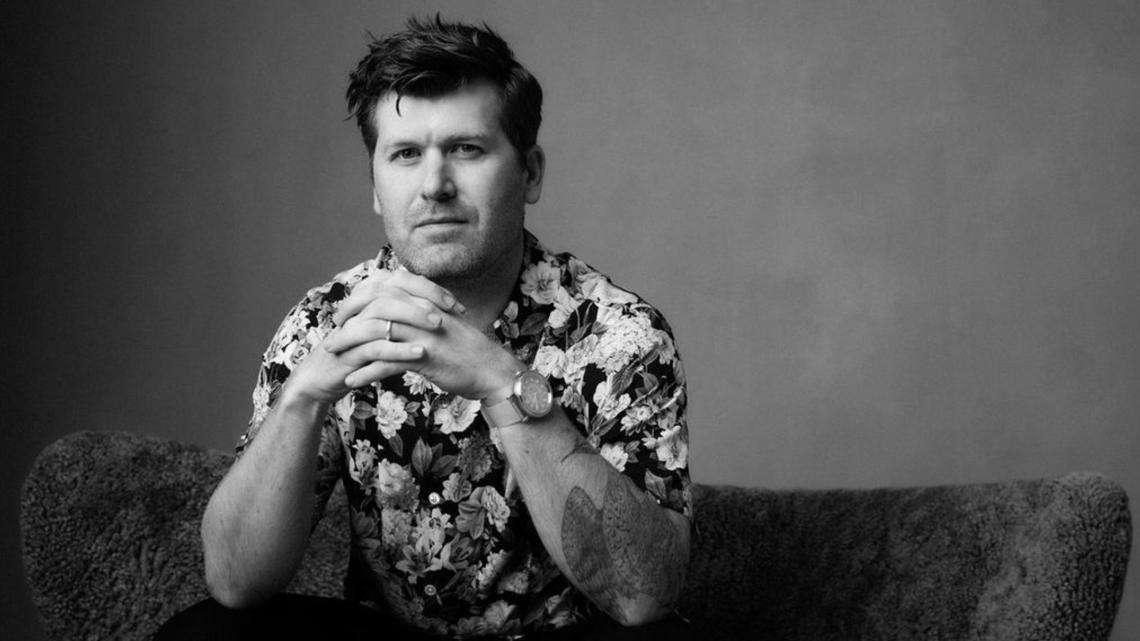
Kwedar: We met many of the cast that are in our film now almost nine years ago at the real-life theater teacher Brent Buell’s apartment. He had maintained these friendships with men he had taught on the inside that now were home for prison and were alumni of this program. Together we all started to talk and hear stories from their lives, and immediately, in those first interactions, I knew the talent was there. And I think it's not just acting talent, it's sort of human talent. It’s the ability to let people see the fullness of yourself and the beauty that comes from that when that happens. And also I met the real Clarence Maclin in that first meeting all those years ago, who stars opposite Colman Domingo and is a co-nominee with myself and Divine G and Clint Bentley. The minute he walked in the room, I was like, “That guy's a movie star.” He just has the charisma and the depth and you can't take your eyes off of him. I didn't know then that he would star in the film. I just knew he needed to be in the film, and then that confidence grew with time. As soon as we set the story on the real-life friendship between Clarence Maclin and John Divine G Whitfield, I knew Clarence had to star in the film.
KENS 5: That performance that you attended nine years ago at this point, was that in the early stages of researching for “Sing Sing”? Did you know at that point you wanted to make a movie about RTA?
Kwedar: It wasn't a performance I attended, this was a breakfast at the real Brent Buell’s apartment with men who are alumni of the program who had been home, so Clarence Maclin was there and the real John Divine G Whitfield. But I also have been to shows inside Sing Sing, and that was early in the research process.
My creative partner Clint Bentley and I also became volunteer teachers ourselves. We taught acting inside the program as part of our research process. I think it was very essential; if we were gonna tell a story about this, we needed to know what it really felt like and start to have access to how to honor it. Now most of our cast star in the film, and I think those building blocks allowed for the confidence to go all the way and build the film the way we did.
KENS 5: Was “Sing Sing” ever supposed to be a documentary?
Kwedar: It’s a great question. Clint and I started in documentary filmmaking, we have training in that world, and so it has influence in the narrative films we do. But we're narrative filmmakers. So we always saw it as a work of fiction that was based on a true story. And yet, at the same time, we had a sense, and this grew with time and other films we were making in the interim as we were working on this project – most notably “Jockey,” that my partner Clint directed – of what can happen when you let the world breathe into your film, and how actually all this journalistic and documentary training that we had in the past could be a strength in our fiction filmmaking and become a component of it.
I think the mystery was, how would it all work together? How could you take dramatic actors from the outside like Colman Domingo and Paul Raci and integrate these established actors with people with real, lived experience who also had acting training, but just in the actual setting of our film, how would that all work together? We didn't exactly know, but we just knew that it all belonged in the film. The dance and the alchemy of it is where I think the power of the movie is, because all of it is there.
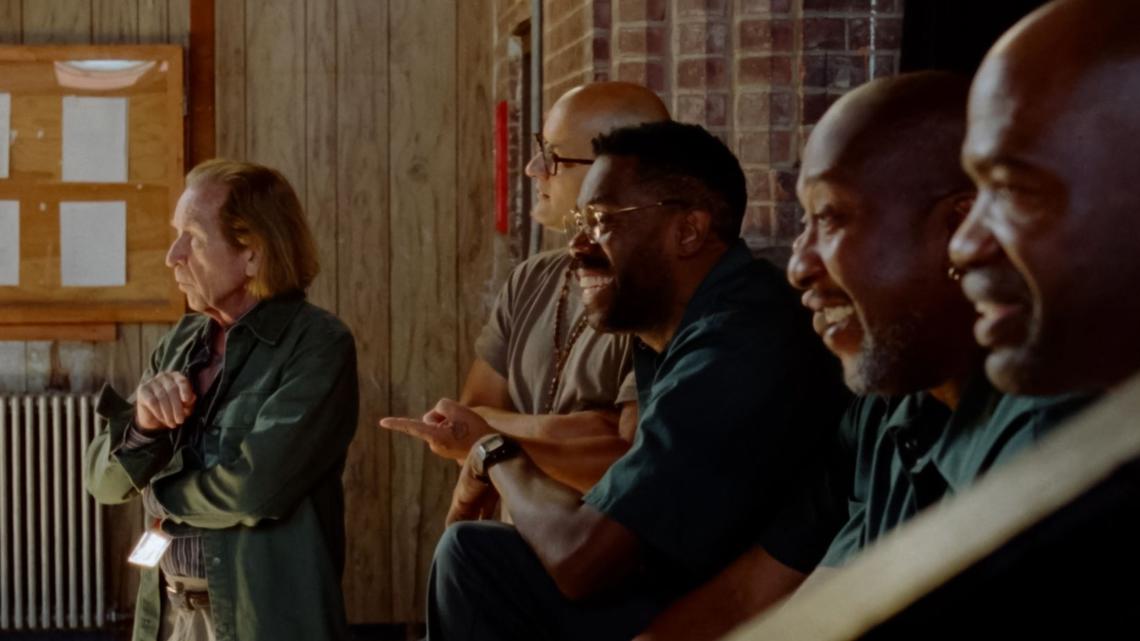
KENS 5: This might seem like an out-there comparison, but the second time I watched “Sing Sing,” the movie it reminded me of was “The Zone of Interest” in that we see these exterior shots of the facility itself, and they’re very solemn shots of this industrial place where we know there's a certain degree of inhumanity being perpetuated. At the same time, the characters we’re closely following are living, or in this case creating art, independent of their environment. Can you talk about working with your collaborators and your actors about locating that tension that's central to the story of being in a place but not being defined by it?
Kwedar: I mean, that question I think was there from the inception of the project as an opportunity to make a movie (of) how can the creative process, the joy in creativity, especially in putting on a play like “Breakin’ the Mummy's Code,’ this time-traveling musical comedy, (thrive)? That, juxtaposed with the environment it’s set within, felt like this act of rebellion in a way. And (it) proves its own point. If it can exist here in one of the harshest environments in the world, if this kind of human connection and care for each other and the kind of liberation that can come through the artistic process can happen inside Sing Sing, then it can and should happen everywhere, and be available to us everywhere. So that was always kind of there.
But you know, it's hard not to respond to and also be impacted by that environment. And with the camera, how could we show images that reflect the program's necessity to these people to exist? So you have these walls, the miles and miles of razor wire that feel like they're kind of choking every room that you're in outside every window. The heat is pretty undeniable. There's no heating and air and, really, ventilation in most prisons in America. And that heat is stifling, it just kind of sits on you. There's also just kind of the ghosts in the walls and it's a maze and like all these things are operating as the antagonistic force of the movie rather than a classic villain. It’s really the place that’s the villain, and the heroes are this community of artists using storytelling to kind of push those walls back.
KENS 5: I’m sure so many audiences who have seen “Sing Sing” are learning about RTA for the first time. Have audience members come up to you and been like, “I didn't know about this program, how can I find out more about these actors,” anything like that?
Kwedar: All the time. I'm very proud to talk about this program because I think it really is effective, and I want to see more programs like it around the country. You know, in our country the recidivism rate of your likelihood to return to prison within three years of your release is over 60%. And less than 3% of alumni of this program ever go back to prison. It’s very staggering in its results. Again, (it’s) not rocket science: You have access to art, people will thrive. That happened and the success is there.
But I think what happens when you watch this movie is it kind of forces a confrontation where you can't just see the prison greens anymore, and the number that kind of helps people disappear. You really have to look these characters in the eyes and hear their stories and their name, and once that happens it's kind of impossible not to see them as full human beings. That's there now. And with that being there, the way that that encourages empathy in all of us is pretty astounding. We've sort of seen that all over the country and all over the world. And I’m really proud to be a part of this story.
KENS 5: The more obvious comparison point I think is “Daughters,” the Netflix documentary from last year, about the program that helps connect men in prison with their daughters through a daddy-daughter dance to help foster that relationship. Both of those movies came out in 2024, they’re in conversation with each other, both are up for Academy Awards... what strikes you about that fact that we have both of those 2024 movies exploring the nuances of what men go through while imprisoned?
Kwedar: I'm just glad that they both exist. I think they're both seeking to expand our empathy and expand our imagination of how we see incarcerated people and how we can relate to incarcerated people. I think the other thing that's powerful about “Daughters” is the reality that when someone is incarcerated and serving a sentence, the family is serving a sentence too. And I think that movie really, acutely displays that. I remember when I was researching “Sing Sing,” I saw videos online of these daddy-daughter dances, and then the separation that happens afterwards when the kids have to go home and the incarcerated men have to go back to their cells, you know, will break anyone's heart. I'm just happy that both films exist, and I hope more come behind us that choose to look at all the infinite ways and stories that happen in incarcerated spaces.