

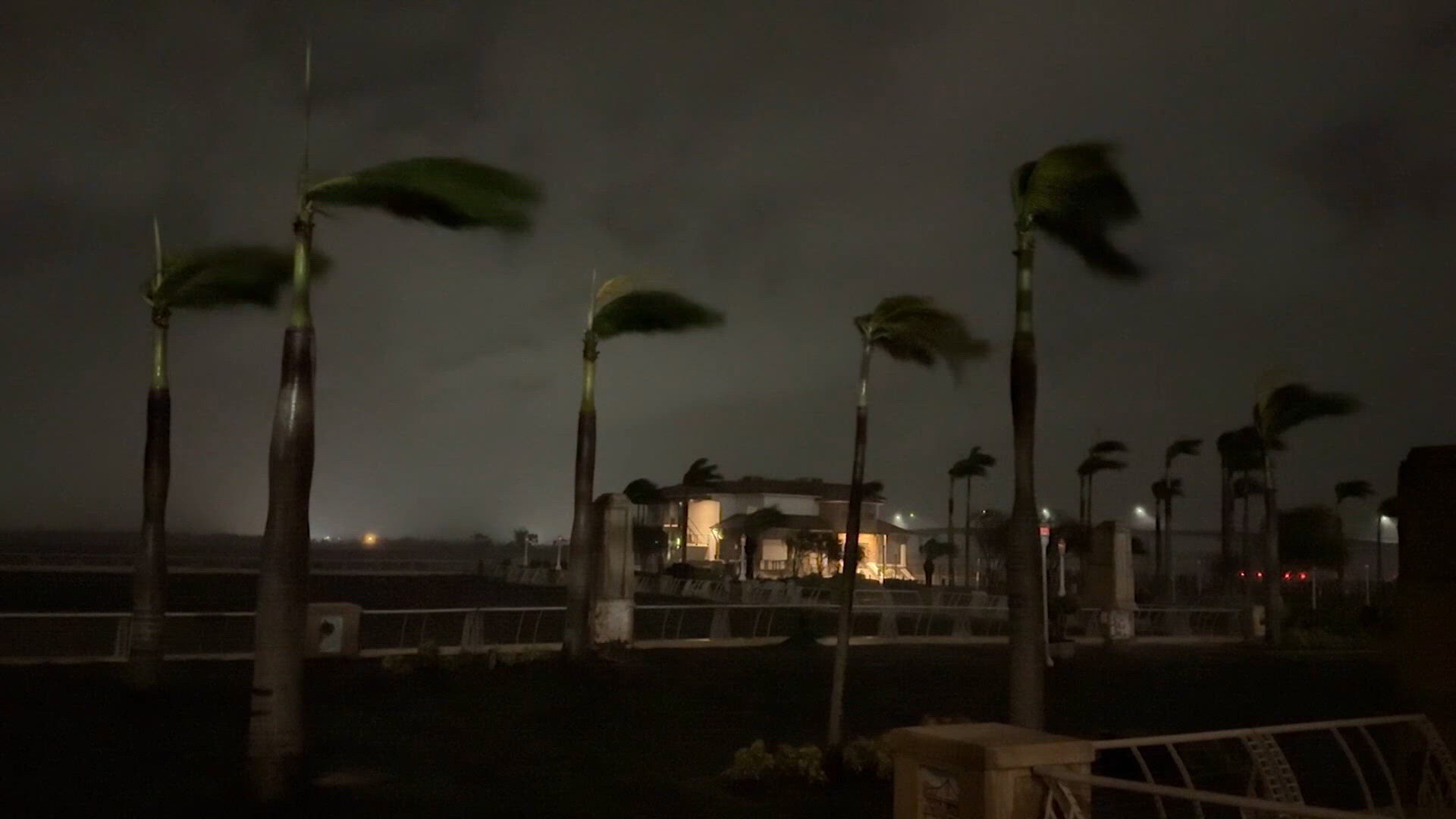
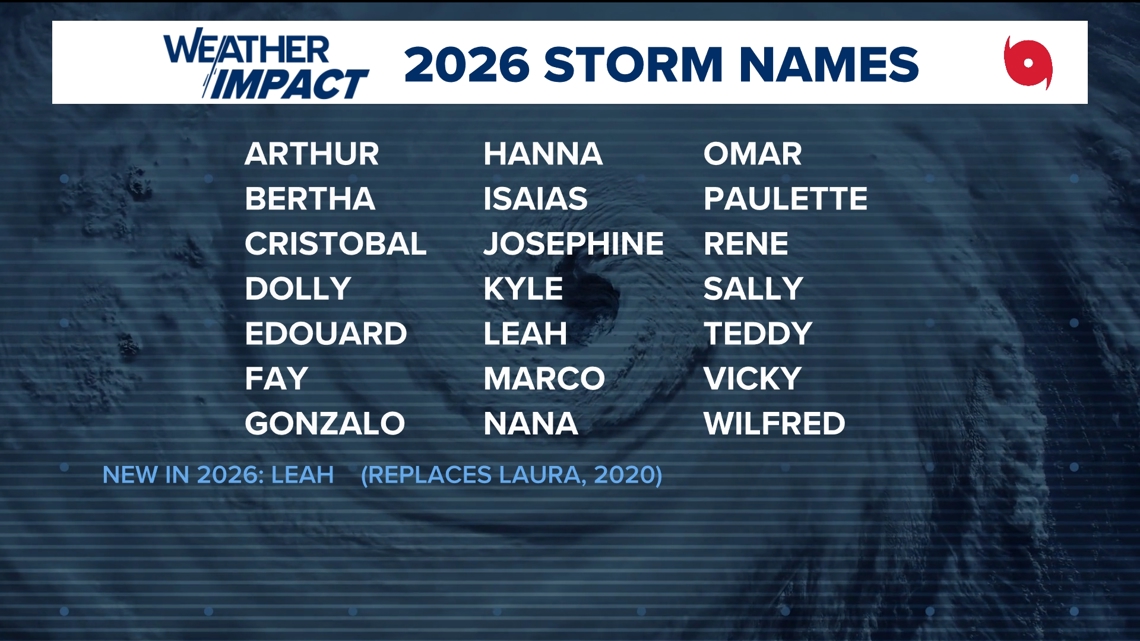
ATLANTA — The 2026 Atlantic hurricane season starts June 1st, and, as always, the first named storm starts with an A and ends with a W. All 21 names, which change each year, aren't randomly chosen. There is actually an international process involved and it's designed to keep you safe.
The naming system
Since 1953, Atlantic tropical storms have been officially named using lists created by the National Hurricane Center. Today, those lists are maintained and updated by an international committee under the World Meteorological Organization.
According to the WMO, six lists of names are used in rotation. Each list is used again every six years and the names alternate between male and female. The names are always arranged alphabetically.
Who decides the names?
Storm naming is managed at a regional level by international meteorological groups. There are several tropical cyclone committees around the world responsible for different ocean basins.
For the Atlantic region, the Hurricane Committee (part of the World Meteorological Organization system) meets annually to maintain and update the list of names. Member countries in North America, Central America, and the Caribbean can propose names for inclusion.
Other regions follow similar systems, but each basin has its own naming lists and procedures.
Some names do not return
If a storm is so deadly or costly that reusing its name would be insensitive or confusing, the name is retired. The decision is made by the World Meteorological Organization’s tropical cyclone committees during their annual meetings. For example, in 2005, Katrina, Rita and Wilma were all retired because they caused so much harm. When a name is retired, it is replaced with a new one starting with the same letter.
What if there are more storms than names?
Until 2020, forecasters turned to the Greek alphabet when an extremely active hurricane season exhausted the regular list of storm names. Storms were then named Alpha, Beta, Gamma, Delta and so on.
However, after a record-breaking season in 2020, which produced 30 storms, nine Greek-letter names were used including Hurricanes Eta and Iota.
Starting in 2021, the World Meteorological Organization replaced the Greek alphabet system with a supplemental list of tropical cyclone names to avoid confusion during future hyperactive seasons.
Why the system matters
The main reason behind naming these storms is public safety. The WMO says short, easy to remember names make it easier to share information and communicate important messages to the public, especially when there is more than one storm out there to track.