

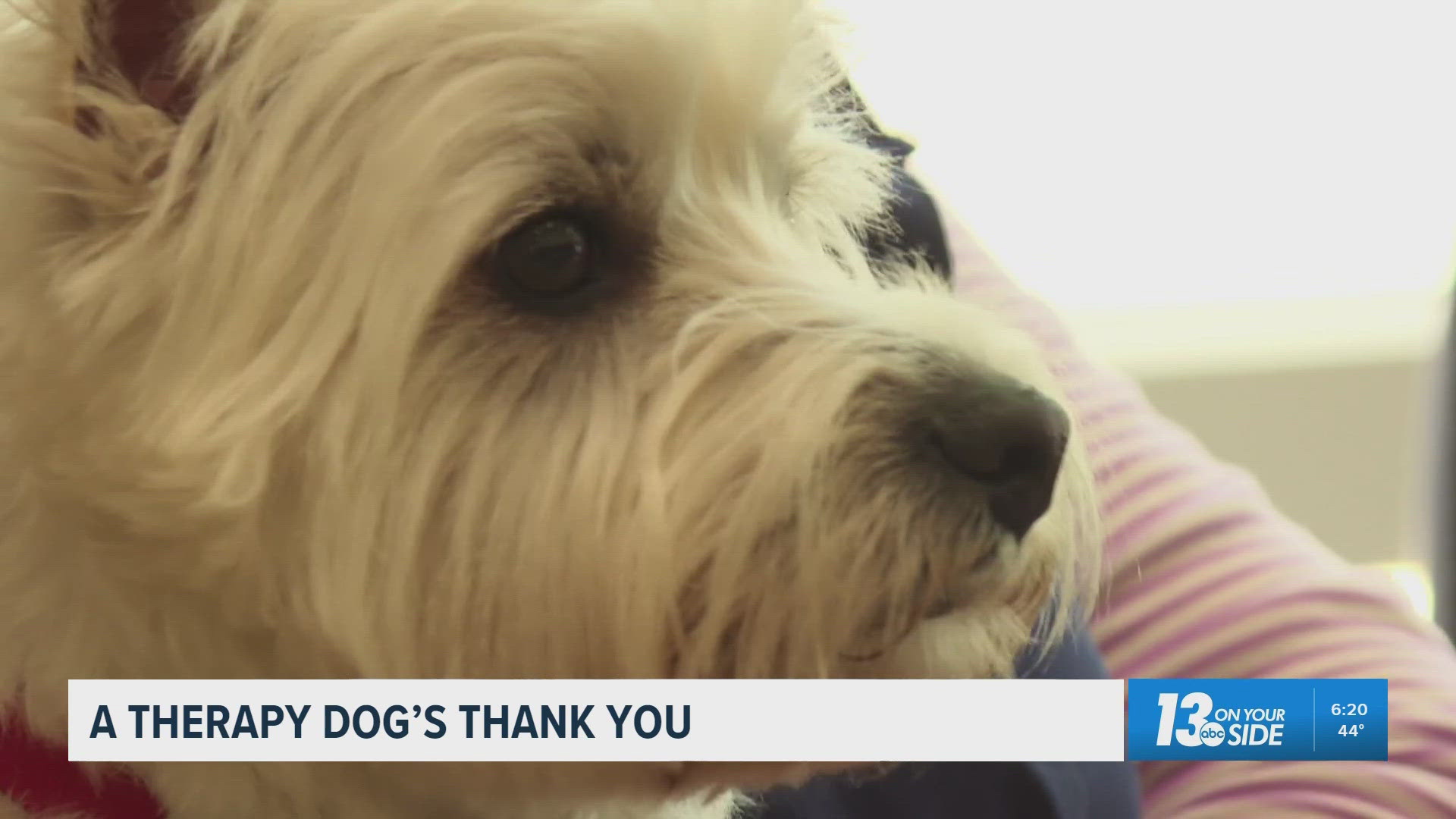
GRAND RAPIDS, Mich. — Every time Diane Cutler walks through the doors of Trinity Health in Grand Rapids, someone says thank you.
Thank you for the love. Thank you for the comfort. Thank you for being here.
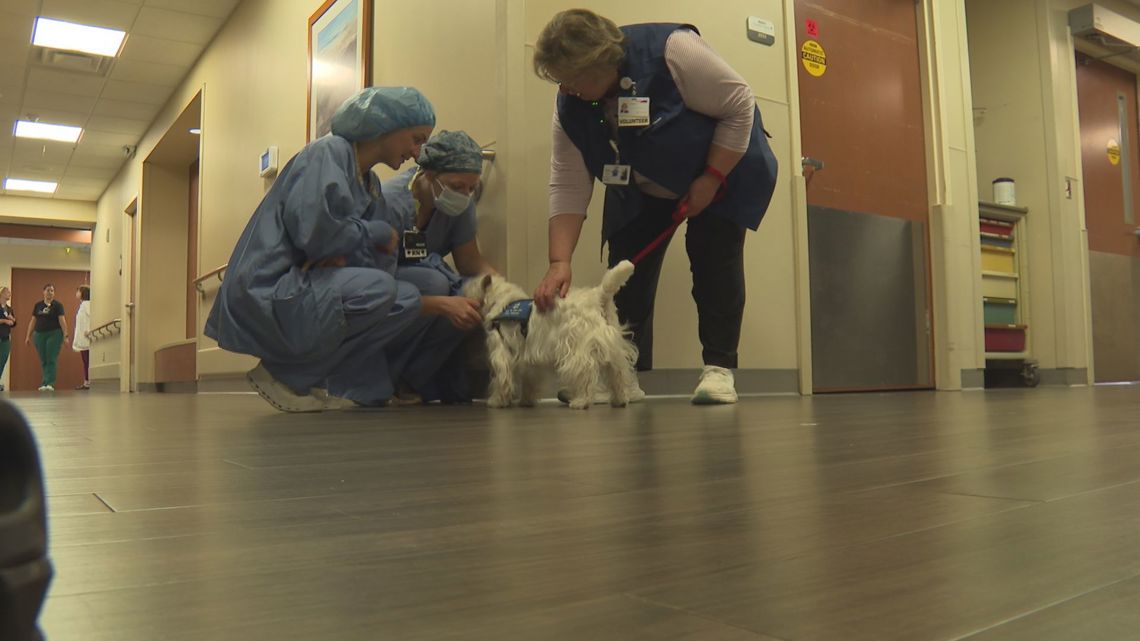
The thanks are mostly for Duncan, who is a two-and-a-half-year-old West Highland White Terrier with a white coat, a gentle disposition and a therapy dog vest that tells him it's time to be a gentleman. Together, Diane and Duncan are a certified therapy dog team with West Michigan Therapy Dogs, visiting Trinity Health twice a month to bring a little light to patients and staff who need it most.


"People like to reach out and touch and just pet his head and scratch his ears," she said. "I think that's a grounding thing. It helps us feel connected."
But no one in that hospital means those two words more than the woman on the other end of the leash.
"There's no amount of thank you that will ever equate to what they've done for our family," Diane said, through tears. "So just sharing the love of this pup is what we want to do."
What most of those patients don't know is that Diane knows exactly how they feel.
She has spent more time in hospital hallways than she ever imagined. Not as a volunteer. As a wife.
Her husband, Chris Malachino, has been fighting a battle most people never see. In his early 20s, he was diagnosed with ulcerative colitis — an autoimmune disorder that, over time, damaged his liver. The condition, called primary sclerosing cholangitis, hardens the bile ducts until the liver can no longer function.
"The liver basically dies," Chris said, from their Caledonia kitchen.
In October 2015, Chris was placed on the transplant list. He was very sick.
“There was a lot of, am I going to get a call? You know, is it going to come in time?” he said.
Three days before Christmas, the call came.
"I get a phone call, and it's Ann Arbor, and they're like — we have a liver," he recalled. "I was just so shocked that this was actually happening. My hopes weren't high."
He went home, called his kids, and handed out the Christmas presents he had already bought. Heirloom gifts, chosen carefully, just in case.
"I was getting to a point where I felt sick enough that in my mind it said maybe I just need to put my affairs in order," Chris said. "If there wasn't going to be another Christmas, I wanted it to be something special."
The transplant was an 11-hour surgery. He came through with little complications.
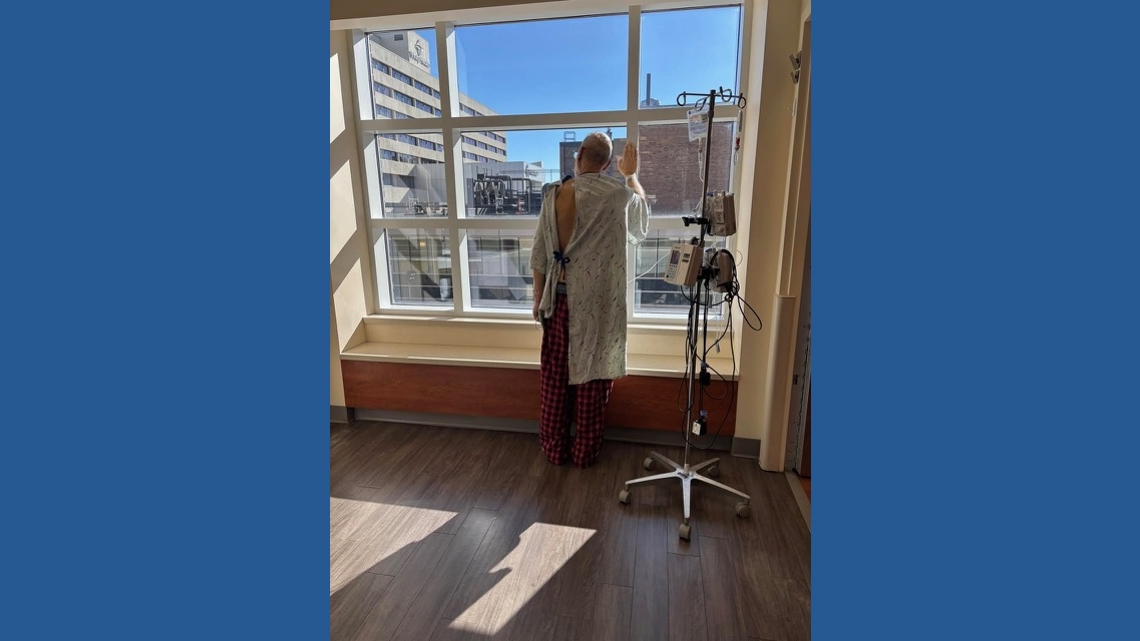
But the disease that destroyed his first liver didn't disappear. It came back, and by the summer of 2024, Chris was deteriorating fast. In 2025 alone, he was admitted to Trinity eleven times and spent 57 days inside its walls, much of that in the ICU.
"It just got worse, really fast," he said.
There were three episodes of profound internal bleeding. Three times Diane called 911. Three times paramedics left their home with lights and sirens.
"The fear was so incredibly intense," Diane said. "You take on a lot of fear and horror and terror."
She became his advocate, his voice, his constant. She learned his medical records, asked the hard questions, made the impossible decisions, including one moment when doctors asked her to approve a procedure whose long-term side effect could have been permanent mental fog.
"I knew how much Chris struggled with that," she said quietly. "I knew what his preferences were. And I couldn't give consent."
She held the line.
On December 9, Chris received his second liver transplant. There were complications. A second surgery followed on December 23rd. They spent Christmas Day together in the ICU at the University of Michigan.
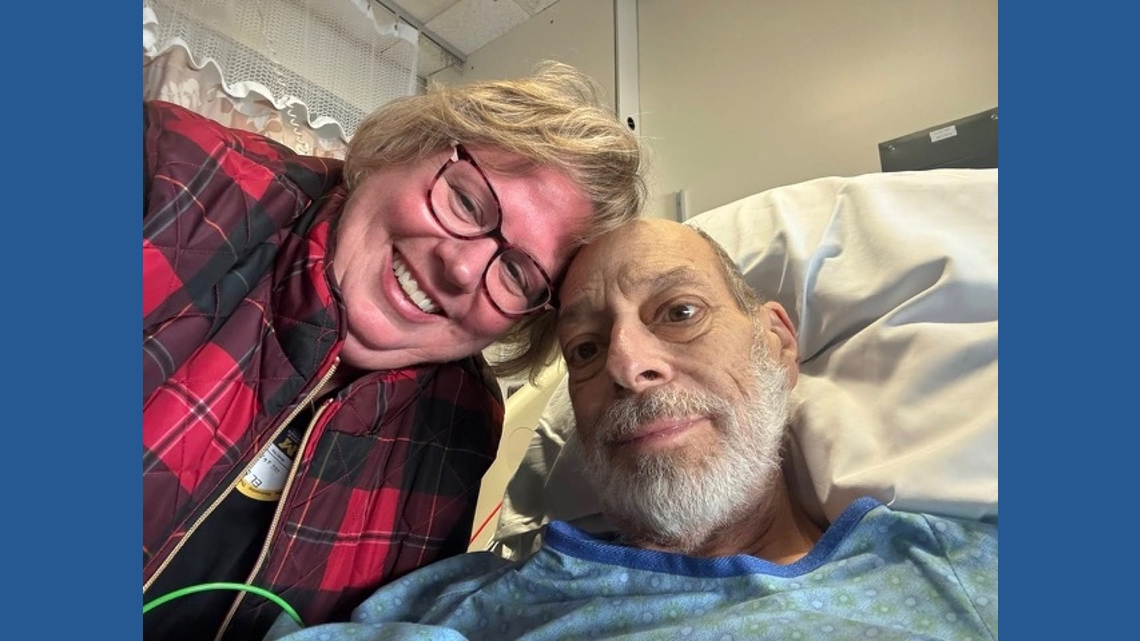
"He was just gathering all those prayers and funneling them right into him," Diane said, holding the prayer blanket a Trinity chaplain had placed over Chris during one of his darkest nights. "I really felt like this whole blanket was just like a catch basin for all of the thousands and thousands of prayers that went out."
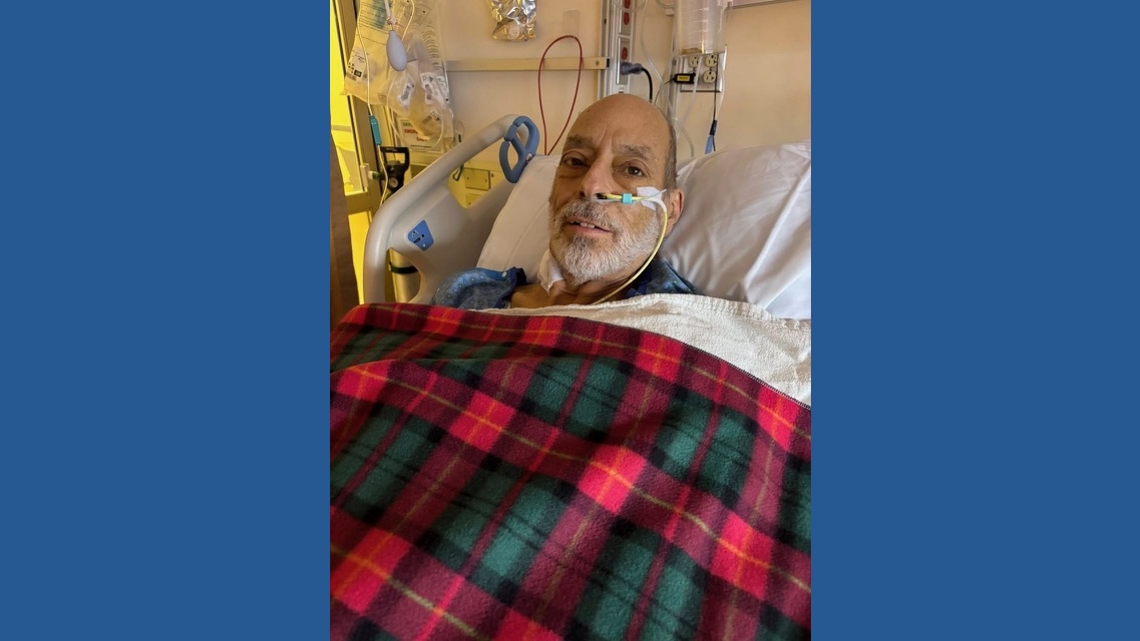
Twenty-two days after his transplant, Chris came home.
"Here I am today," he said.
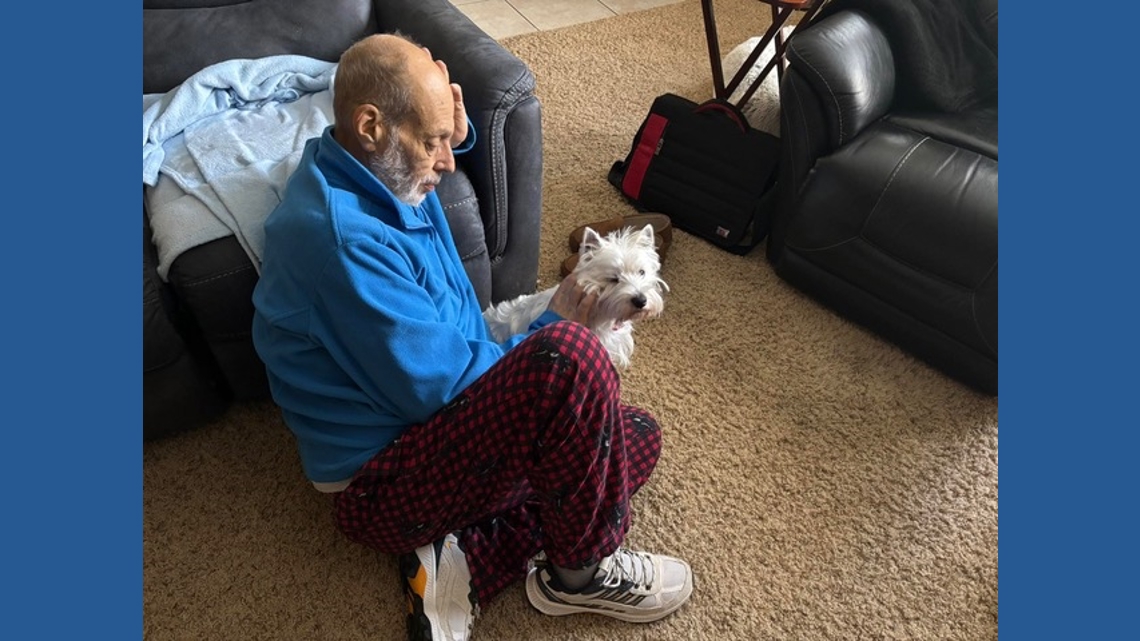
The gratitude that followed was enormous and impossible to contain in a thank you card.
"Part of what we wrestle with now is how do you say thank you?" Chris said. "How do you honor the gift? It's not like you can just send thank you notes to everybody. It doesn't feel like enough."
Diane had been a member of West Michigan Therapy Dogs since 2004 and had spent years volunteering with previous dogs at libraries and schools. When Duncan came into their lives in 2024, she knew exactly where she wanted to take him.
Back to Trinity.
"I kind of said I need to thank these people somehow, and cookies wasn't going to be enough," she said. "They saved his life. That is a really profound thing. I need to somehow share the depth of my gratitude."
She completed the paperwork, the background checks, the training. She specifically requested the ICU floor the floor where she had spent so many sleepless nights watching her husband fight to survive.
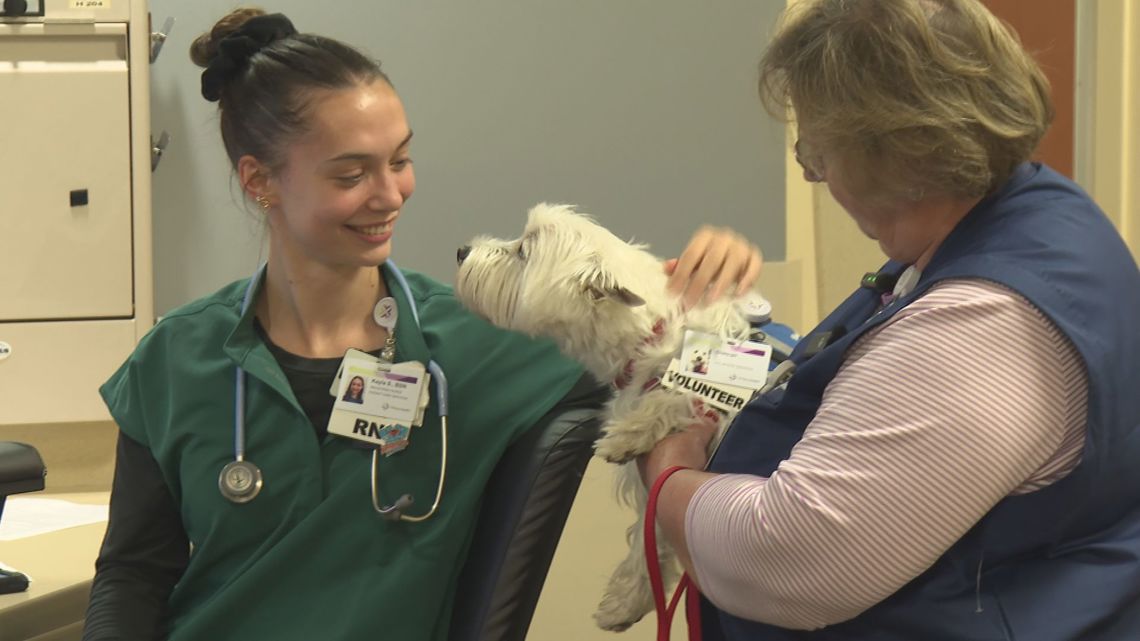
"The first couple of visits were really hard," she admitted. "The staff recognized me more than I recognized them. That tells you how much time I had spent on that floor."
One of the physicians she encountered said it best.
"One of the PAs actually said to me, Diane, I don't want your cookies. I want your dog."
She laughed telling the story. And then her eyes filled.
"I remember how many days I sat in the ICU and felt alone and afraid," she said. "All I wanted to do was hold my dog. So if I can pay that forward, that's what I want to do."
There are two liver donors out there. Two families who gave Chris his life. Twice.
"We recognize that there's an empty seat at their table," Chris said, "which allows me to be at mine. That doesn't go unnoticed."
Diane and Chris, speaking to 13 ON YOUR SIDE at their dining room table, have one extra place set. For the donor. For the family they've never met, and may never meet.
"I think about those nameless families frequently," Diane said. "Maybe even sometimes daily. And you just whisper a thank you."
It's a quiet act. A daily one. A way of saying, we know what this cost you, and we have not forgotten.
"To those families, I'd like them to understand that what they've lost is not totally in vain," Chris said. "There is some good that comes from it."
On the days Diane comes home from Trinity, Chris says he can see it in her face. The red eyes, the full heart, the weight and the relief all at once. Duncan flops down and sleeps, spent from the work of loving strangers for an afternoon.
"We live a life of gratitude," Diane said simply. "It's an important way for us to live."
There is no thank you big enough for two liver donors, for an ICU team that saved a life three times, for a PA who asked for the dog instead of the cookies. There are no words for the families sitting tonight at a table with one fewer person in the chair.
So Diane clips on Duncan's leash. And she goes back.
Diane and Chris hope this story inspires you to consider organ donation. Information on how to register as a donor is available at michigan.gov/sos or at donatelife.net. To learn more about West Michigan Therapy Dogs or how to get involved, visit wmtd.org.